
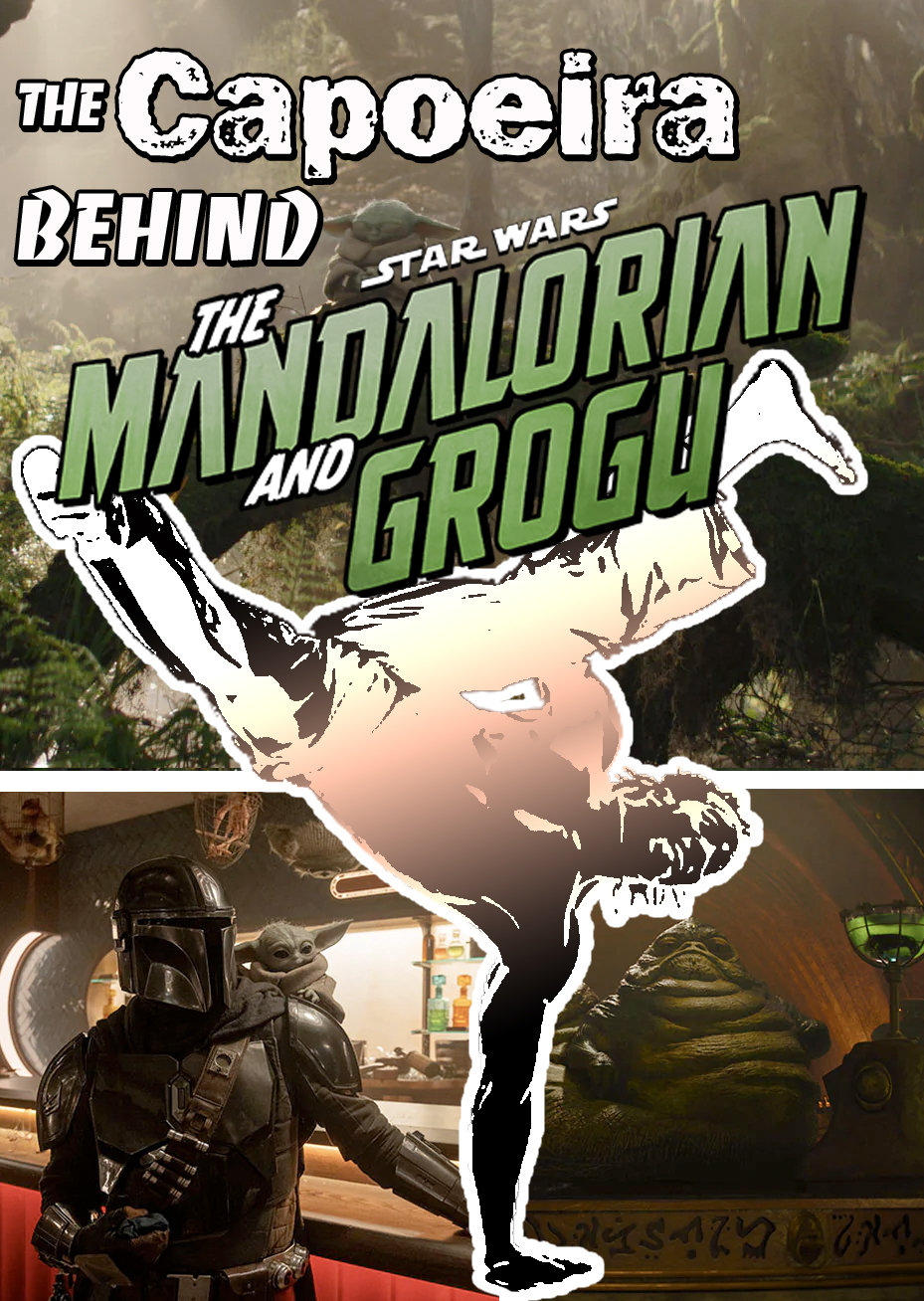
Did you know The Mandalorian is also a Capoeirista? Find out how the space Bounty Hunter mastered the Brazilian martial art and why the Star Wars universe still has deep roots in the Bay Area!
Read my latest review, before or after you’ve seen the movie…

Star Wars: The Mandalorian and Grogu takes place after the events of season 3 of the Disney+ series. That show, The Mandalorian (2019 – 2023) was the first live-action series from an old movie franchise with roots right here in the San Francisco Bay Area, Star Wars. The Mandalorian takes place five years after the events of Return of the Jedi (1983), probably its greatest appeal, and it featured a new Boba-fett type character, Din Djarin (dɪn ˈdʒɑːrɪn), a.k.a. the Mandalorian.
IN the Mandalorian, actor Pedro Pascal was able to develop a character from the inside out, spending almost the entirety of the role behind his iconic helmet. Defining this character relied almost exclusively on his voice and body language. But Pascal was not alone in crafting the Mandalorian’s movements. Enter Lateef Crowder dos Santos.
A Brief History of Capoeira
The Afro-Brazilian martial art combines dance, acrobatics, and music. It emerged in Brazil, developed among 16th century enslaved Africans. Stripped of their culture and forced to work on colonial plantations, they adapted traditions from martial arts like the Angolan warrior dance Engolo, to prepare for potential escape or resistance. To bypass strict colonial bans on martial practices, practitioners concealed violent kicks and take-downs within the music, songs, and the playing of African musical instruments.
In 1888 slavery was abolished in Brazil and many newly freed Brazilians faced unemployment, prejudice. By 1890 an official ban on the practice of Capoeira was adopted because of associations with street gangs and organized crime. Consequently, most capoeiristas faced police brutality and harsh imprisonment.
By the 1930s, the Brazilian government’s view of capoeira began to shift. This cultural shift is most frequently attributed to Mestre Bimba who revolutionized the practice by opening the first recognized capoeira academy in Salvador, Bahia, in 1932. He legitimized the martial art with a more academic / athletic structured training regime. In 1972, the Brazilian government officially recognized it as a national sport and opened the gates to its export outside the borders of Brazil, and its current ubiquity.
Discover more from
Subscribe to get the latest posts sent to your email.